
AI in philanthropy: the key question is how to use it
Developments in AI are advancing rapidly. Within the philanthropic sector, it is becoming increasingly clear that this technology is shaping the way we work. The question, therefore, is not whether AI will play a role, but how organizations will approach with it.
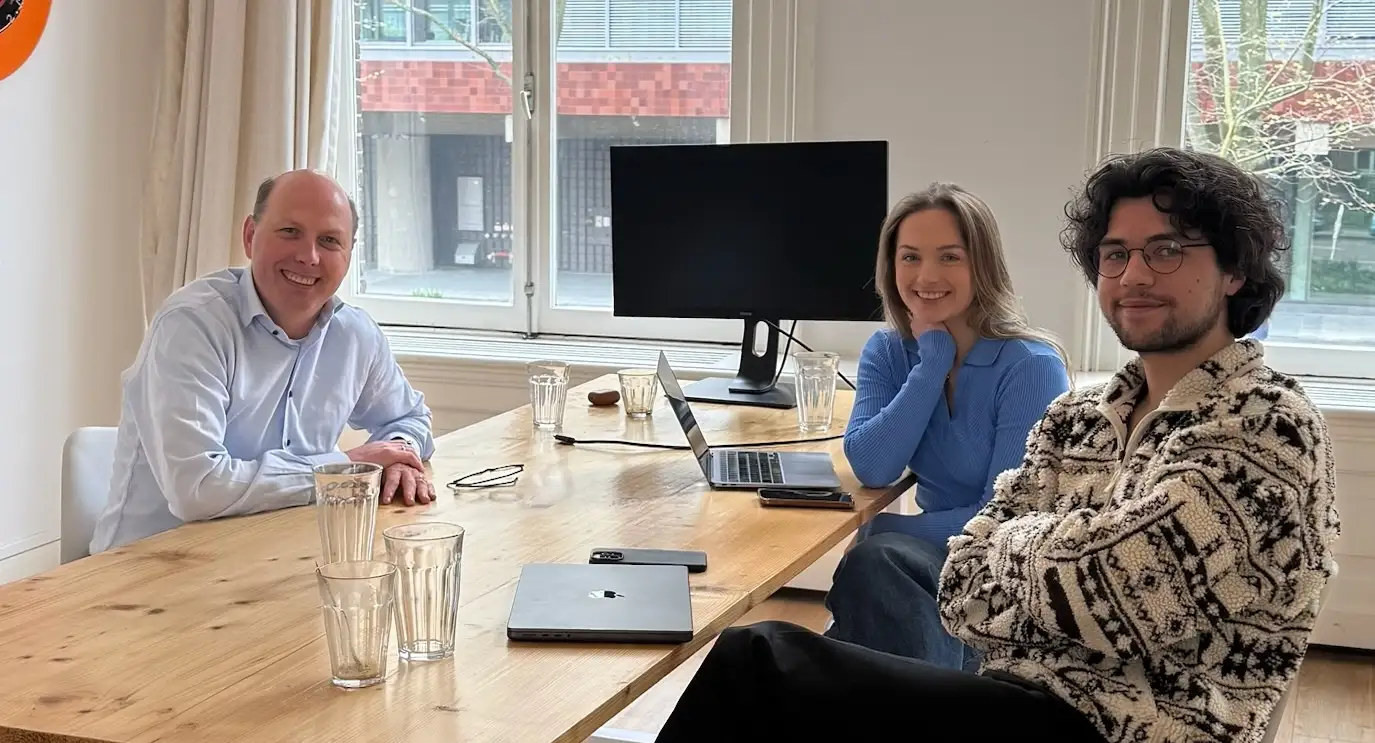
To better understand what this development means in practice, we spoke with Frits Korthals Altes, Director of Digital Transformation, AI and Innovation at the consultancy firm Turner. He has spent many years guiding organisations in applying technology within their processes.
Frits describes the advent of AI as follows: It's like being given a new set of tools, what matters is what you choose yo create with them. The crux of the challenge, therefore, lies in the choices organisations make.
From experiment to concrete impact
In recent years, AI has evolved from a specialist field into a widely accessible technology. While it was once used mainly by small groups of experts, it has now become part of the daily work of many professionals. “Three years ago, AI suddenly became accessible to everyone,” says Frits. “With the arrival of tools like ChatGPT, anyone could start using it.”
These developments have led to a period of experimentation, with many organisations beginning to explore the possibilities. In this phase, what is often referred to as a “technology push” emerges: experimentation for its own sake, without delivering immediate value.
The focus is now shifting. Based on initial experiences, it is becoming clearer where AI truly adds value and where it does not. At the same time, the gap is widening between organisations that are actively working with AI and those taking a wait-and-see approach. “Whereas organisations once said, ‘we should do something about this at some point,' you now hear them say, ‘we need to act now,'” says Frits.
The real value lies in embedding this in processes
In practice, the greatest challenge lies not in the technology itself, but in translating it into processes and ways of working. Organisations that start from the technology risk developing applications that contribute little to their ultimate goals. A common example is the automation of existing processes without re-examining their underlying purpose. A newsletter may be produced more quickly, but if AI-generated content makes it less relevant, its impact will decline
The first question to ask, therefore, is a more fundamental one: where does friction arise in the process, where is time lost, and where can the quality of work be improved? Once these questions are clear, there is room to explore how AI can provide support. In many cases, this involves relatively small-scale applications that integrate directly into existing processes. “The greatest impact is rarely found in large, spectacular applications,” says Frits. “Moreover, for many organisations, these are not immediately feasible. The real value often lies in small improvements that deliver quick results.”
To put this into practice, it is helpful to distinguish between different types of change. At Turner, they identify three: improvement, renewal, and innovation (Figure 1).
- Type 1: Improvement. You continue doing things as you currently do, but more efficiently.
- Type 2: Renewal. By approaching the process differently, can it be made easier and faster?
- Type 3: Innovation. Something entirely new, such as the development of a new product or service.
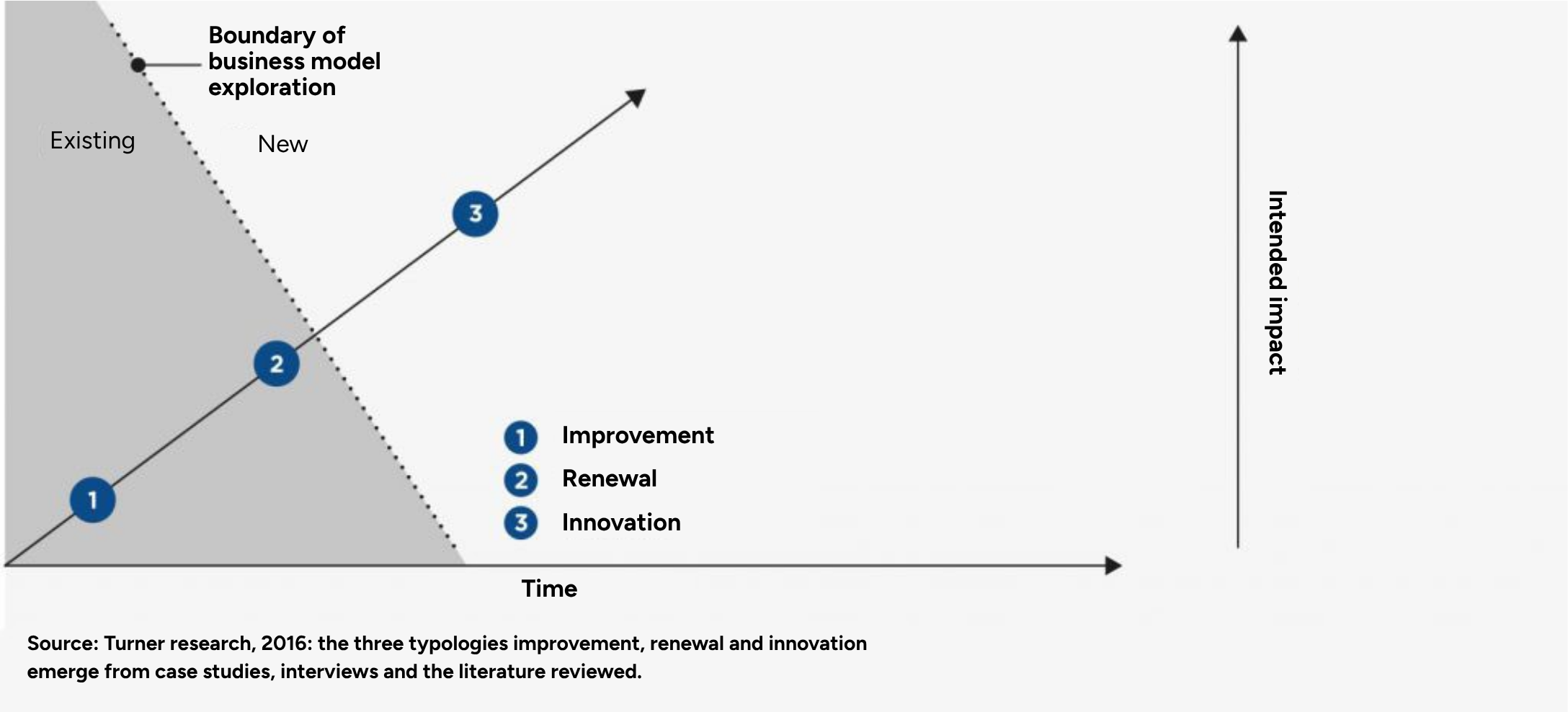
This distinction makes it clear that AI can be applied at different levels. At the same time, its impact increases as you move from improvement to innovation. This also requires different choices, different capabilities, and a different way of organising. Frits observes that organisations often jump straight to innovation, while there are significant opportunities to be found in improving and renewing existing processes.
Applying AI in philanthropy
There are also many opportunities within philanthropy to use AI to support existing processes. Across the entire journey, from connecting with one another to accounting for how funds are spent, there are many ways to apply AI in a meaningful way.
The application process is a good example. Many application processes are structured around forms and fixed formats. While this provides clarity, it does not always align well with the diversity and capabilities of applicants.
The ability to clearly articulate an idea on paper varies greatly from person to person. As a result, there is a risk that the quality of an application is influenced by writing skills, whereas the substance of the initiative should be the primary focus. “You often see applications being assessed based on how well someone can complete a form, rather than on the quality of the idea,” says Frits. AI offers opportunities to change this dynamic.
By redesigning processes, more room is created for context and nuance. For example, applicants could explain their plans through a voice message, after which the relevant information is structured and translated into the required data.
This leads to a more accessible process and makes it possible to gather richer information. In turn, this makes it easier to achieve better and more suitable matches.
Diligence and responsibility
At the same time, the use of AI requires a careful approach. In a sector where trust and social responsibility are central, it is important to explicitly consider how this technology is applied. Aspects such as transparency, explainability, and privacy play an important role in this. In addition, attention must be paid to data quality and to how systems are monitored.
AI differs from traditional software in that its outputs can vary. This calls for clear frameworks and deliberate choices about where AI is applied and where human judgement remains central. A well-considered design of processes, including control mechanisms and clear responsibilities, is a key prerequisite for the responsible use of AI.
The next step
AI will play an increasingly important role in the sector. Its impact will largely be determined by the choices organisations make today. Organisations that make progress in this area have a clear understanding of where they want to improve and how technology can support this. They do not approach AI as a standalone solution, but as an integral part of the way they work.
FindNFund supports organisations in this process by sharing insights, developing applications, and exploring together with the sector what works in practice.