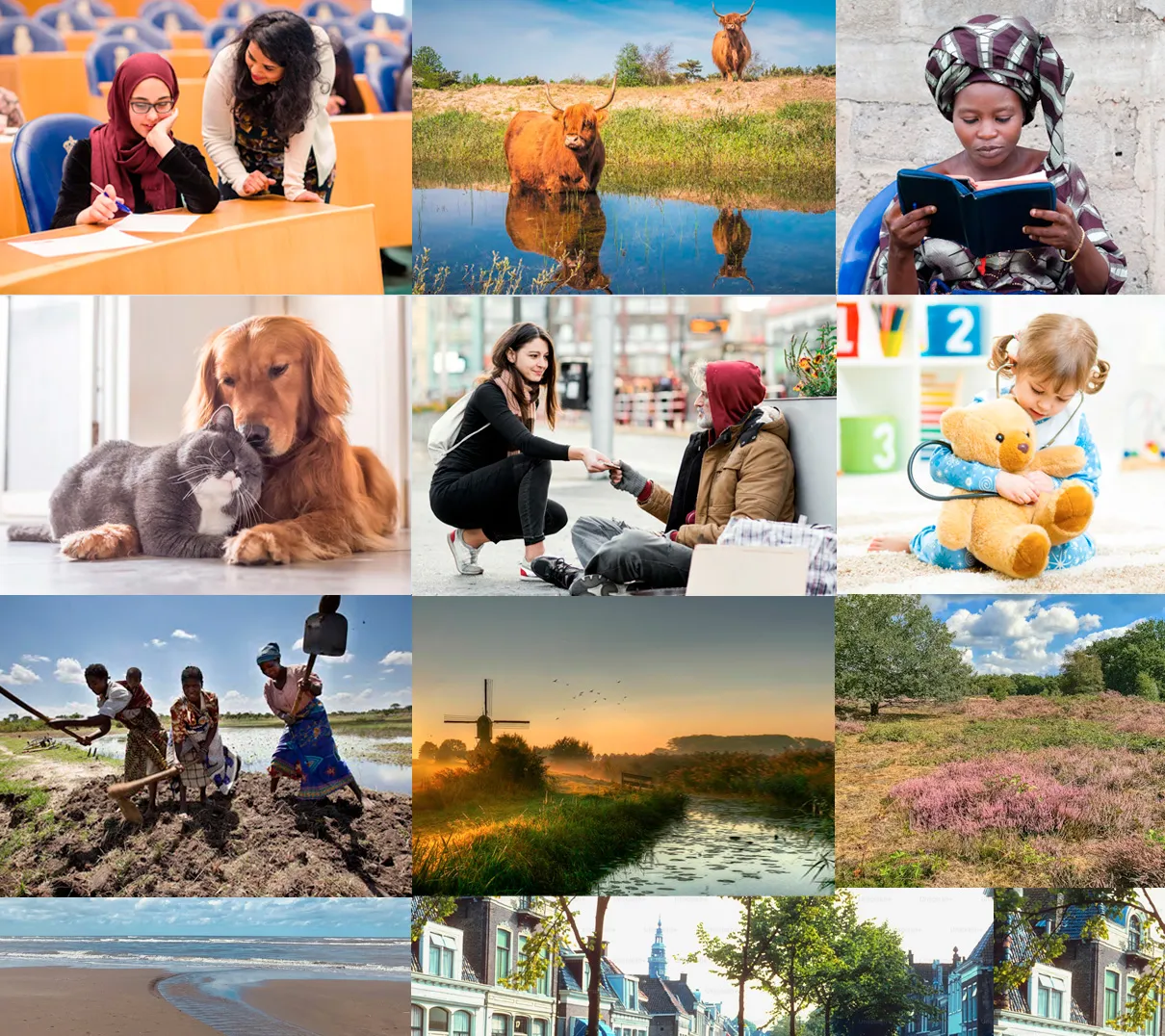

Charities are the heart of society. They support people in vulnerable situations, protect nature and animals, and give a voice to problems that would otherwise remain overlooked. That is not something you want to lose. Yet the space in which they work is under pressure. To preserve their role in society, collaboration is needed. Not only between charities, but also with other parties in the philanthropic sector. Why is that collaboration so important? We spoke about this with Sandra van der Wal and Sara Vermeltfoort of Goede Doelen Nederland.
Why are charities so important?
Their work goes much further than solving problems. They bring people together, create engagement and give a voice to groups that would otherwise be heard less easily.
An important function is identifying problems. Civil society organisations draw attention to abuses and developments that are not always visible or broadly supported. In doing so, they contribute to public debate and help put issues on the social agenda.
In addition, charities offer people the opportunity to commit themselves to others. Volunteering not only creates social impact, but also social contact, fulfilment and a sense of purpose. In this way, charities strengthen the connection between people and form an important part of the social fabric.
Why are charities under pressure?
Not every cause that charities work for can count on broad support. Think of organisations that call attention to climate change or other politically sensitive issues. According to Sara, the space to make these voices heard is increasingly under pressure and there are concerns about the protection of fundamental rights.
When certain voices are excluded, social problems and interests risk disappearing from view. That is precisely why it is important that charities can continue to operate independently.
There are also practical and financial challenges. Financial support from individuals, companies and governments is indispensable for charities to continue their work. That is why they must be able to keep asking for that support through their fundraising. Increasing regulatory pressure demands time and capacity that organisations would rather spend on their social mission. Sara also points to the impact of budget cuts on the sector.
The importance of collaboration
An individual charity can mean a great deal for its own mission, but often has limited influence on legislation and political decision-making. By joining forces, organisations can represent their interests more powerfully, share knowledge and support one another.
Goede Doelen Nederland plays an important role in this as an industry association. The organisation does not focus on the substantive missions of its members, but on the conditions they need to be able to do their work. It does so through, among other things, advocacy with politicians and government, support with laws and regulations, organising training and facilitating knowledge sharing for charity staff. In doing so, it focuses on fields such as marketing and fundraising, impact, volunteer management, HRM, integrity, operations and finance.
One example is their efforts to preserve the gift deduction, which allows donors, under certain conditions, to deduct their donations from their taxes. Abolishing it could have major consequences for charities' income. Goede Doelen Nederland therefore met with members of parliament and made clear what was at stake for the sector. According to Sandra, that advocacy contributed to the scheme being preserved.
Collaboration makes the sector stronger
That collaboration does not stop at the boundaries of the industry association. Goede Doelen Nederland also works with other civil society partners to advocate for shared interests. Within the broader sector, charities, funders, industry associations and platforms such as FindNFund each play their own role. By connecting their knowledge, resources and networks, they can strengthen one another.
A strong society calls for civil society organisations that can continue to do their work freely and effectively. That requires not only sufficient resources and space, but also organisations that stand up for their interests together. Because you don't build a strong sector alone.