

What is unjust is not always unlawful. And what is unlawful is often not corrected. Sometimes conversations, investigations, and reports stall, abuses get lost in political deadlock, or entire groups of people remain structurally unheard. Precisely at that point — where other means fall short — the law can make the difference.
That is where PILP steps in: the non-profit foundation that supports civil society organisations, communities, and movements with legal advice and, when necessary, by going to court together. We spoke with Jelle Klaas, executive director of PILP, about what they do, why their work matters, and the challenges they see for democracy.
The legal ally
PILP, the Public Interest Litigation Project, is not a regular law firm. It is a non-profit foundation and a legal ally of civil society organisations, communities, and movements advocating for human rights and the rule of law. PILP supports them with legal advice and, when strategically meaningful, by going to court together. Not litigation for its own sake, but to bring about lasting change.
“Our role is to give people and communities a voice in cases where other means fall short,” says Jelle. “We make sure fundamental rights don't just exist on paper, but are protected in practice.”
The law as a means, not an end
Strategic litigation sounds technical, but it revolves around one core question: when can the law contribute to societal change?
“A lawsuit is never our starting point,” says Jelle. “Often, years of research, reports, and conversations with policymakers have already taken place. But sometimes that isn't enough. Then legal proceedings can be a necessary step to make change possible.”
Strategic litigation means deliberately using a court case to achieve broader social, political, or legal impact. It's not only about winning for one party — it's about protecting the rights of larger groups of people, often minorities whose interests are structurally underweighted.
Movements at the helm
What sets PILP apart is how it works. Jelle: “We call our approach movement lawyering. That means the communities and movements — not the lawyers — are at the centre. We're allies: we set strategies together, weigh the pros and cons of a lawsuit together, and look at the consequences, both legal and societal.”
At the same time, PILP safeguards legal integrity. Cases must be legally sound, procedurally correct, and fit within the broader goal: the progressive realisation of human rights and the rule of law.
In the interest of us all
A large part of PILP's work consists of public interest cases: lawsuits that aren't about a single individual but about protecting the rights or interests of a larger group of people. They are essential to the democratic rule of law, because they ensure that the policies and practices of governments and companies are tested against legislation and human rights.
“Without public interest cases, the interests of groups without a voice would often be overlooked,” says Jelle. “These cases enable structural change and protect rights that affect us all. They aren't in the interest of just one party — they serve society as a whole.”
Public interest cases where PILP stepped in
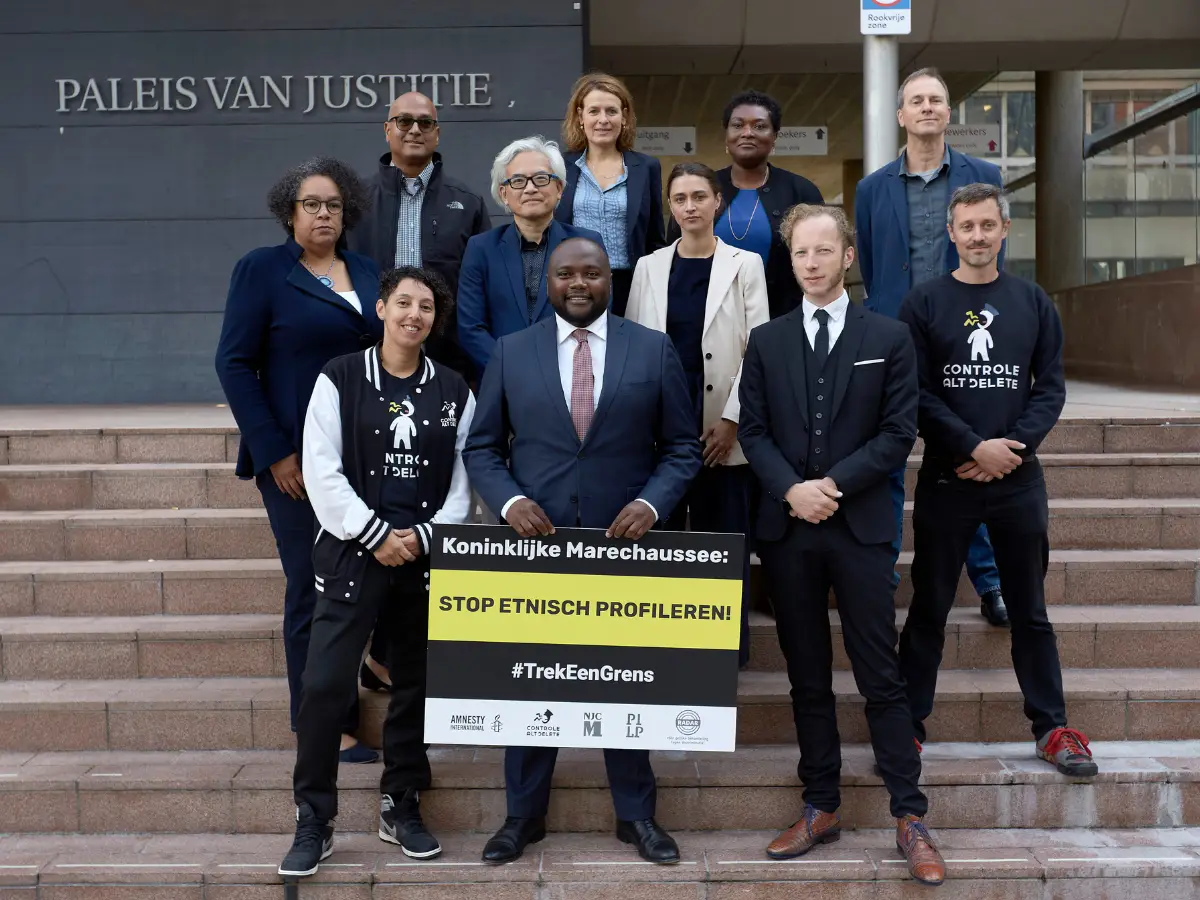
Well-known examples in the Netherlands include the Urgenda case on CO₂ reduction, but closer to home PILP also played a role in cases about the right to water for children and stopping ethnic profiling at border controls.
- In the drinking water case, families with children were being cut off from water — something that turned out to violate the Convention on the Rights of the Child. Through a public interest case, the court eventually ruled that this practice was unlawful. Since then, children can no longer be cut off from drinking water.
- In the ethnic profiling case, the fight wasn't for damages for a handful of individuals, but to end an entire practice that could affect thousands of people. Successfully: ethnic profiling at border controls is no longer allowed.
Access to justice under pressure
“Exactly these kinds of cases are increasingly under fire,” says Jelle. “Civil society organisations are accused of doing politics through the courts, or judges are labelled activists. That framing is harmful and incorrect.”
Judges test cases against the law in force — law that parliament and government themselves have established. When politics and policy fall short, access to the courts is an essential democratic safety net. Not as a counterweight to democracy, but as part of it.
The democratic rule of law is not only about the will of the majority, but also about protecting minorities: from children in poverty and caravan-dwellers to undocumented people or religious minorities. Public interest cases ensure their rights are taken into account too.
“You often hear people say a particular case is nonsense or that protests are a hassle,” says Jelle. “But what they forget is that it's precisely these kinds of cases that make sure everyone — including themselves — keeps the right to stand up for their interests in the future. Public interest cases therefore don't only protect the group directly involved; they protect the rights of us all.”
Visible rulings, invisible work
Much of PILP's work remains invisible — because of confidentiality, strategic choices, or because a case never reaches a courtroom. But the impact is significant. Together with other law firms, academics, and journalists, PILP has contributed over the past years to landmark rulings on statelessness, discrimination, the right to protest, and human rights.
“That work requires time, expertise, and independence,” says Jelle. “And that's why we rely entirely on donations and engaged citizens.”

Why PILP remains essential
In the coming years, PILP plans to work on the rights of children, homeless people, undocumented people, and marginalised communities, and on themes such as discrimination, socio-economic inequality, data centres, and the right to protest.
At a time when access to justice is under pressure, PILP's work only becomes more important. Not to undermine democracy, but to protect its foundations.
Because public interest cases are not just in the interest of a few. They are in the interest of all of us.
How you can help make PILP's work possible
PILP's work is only possible thanks to grants and donations. Every contribution, large or small, gives PILP the space to keep advising people and communities, tackling injustices, and standing up for rights when other means fall short.
Want to learn more about the organisation or how to contribute? View the profile → www.findnfund.com/finders/stichting-pilp
Could you use PILP's help?
Do you work at a civil society organisation, community, or movement and are you stuck on an issue where rights are at stake? PILP can think along with you. PILP offers legal advice and explores together whether the law can contribute to structural change. A lawsuit is never the goal in itself, but one of the possible means.
Get in touch with PILP at www.pilp.nu